In contemporary life the body is constantly negotiating a complex interplay of external pressures and internal responses. Diet lifestyle stress and environmental pollutants converge to shape our sense of vitality or its absence. This convergence has given rise to a cultural preoccupation with renewal often expressed through the language of detoxification. A detox as commonly framed is not merely a dietary regimen but a symbolic act an attempt to reclaim agency over one’s physiology in a world perceived as toxic. Lasting from a few days to several weeks such practices promise rebalancing not just of metabolism or digestion but of the self in relation to its surroundings. Yet beneath the ritual of purification lies a deeper question how do we responsibly navigate health when faced with both abundance and ambiguity
The structured approach to detox outlined in wellness discourse typically involves four interrelated phases. First a conscious reduction of exposure to processed foods synthetic chemicals and psychological strain emphasizes purity in consumption and environment. Second specific support is directed toward the body’s natural detoxifying organs particularly the liver and kidneys often through botanical protocols. Third elimination pathways are activated via practices that engage the skin lungs and colon. Finally caloric restriction sometimes aligned with intermittent fasting is employed to stimulate cellular renewal. While the scientific validity of these steps varies their cultural resonance is undeniable. They reflect a longing for clarity in an age of overload for control in a landscape of invisible threats.
This desire for agency extends beyond dietary choices into other intimate domains of health including sexual well being. Conditions affecting intimacy are rarely discussed in the same breath as detox or environmental health yet they belong to the same continuum of bodily experience. When function falters individuals often seek answers in solitude wary of stigma or clinical bureaucracy. In such moments the internet becomes both refuge and minefield. Some may begin not by seeking a quick fix but by quietly gathering information perhaps even exploring Generic Cialis as a treatment choice not as a transactional act but as part of a broader effort to understand their physiology. This form of inquiry though private echoes the same principles that underpin thoughtful detox practices a search for balance an aversion to harm and a quiet insistence on informed self care. The crucial distinction lies not in the act of seeking but in the quality of the sources consulted and the willingness to consult a professional when needed.
Art and literature have long mirrored this tension between internal disorder and the yearning for harmony. From ancient purification rites to modern narratives of burnout and recovery the motif of cleansing recurs as both literal practice and metaphor. In contemporary culture detox has been aestheticized transformed into a lifestyle brand complete with green juices and minimalist routines. Yet its deeper meaning persists the recognition that health is not a static state but a dynamic negotiation between the self and its world. This perspective aligns with holistic traditions that view vitality as emerging from alignment not just absence of disease. Whether through fasting herbal support or mindful movement the goal is not perfection but responsiveness the ability to listen to the body’s signals and adjust accordingly.
Responsibility then becomes a central ethic. In detox as in pharmacology the line between empowerment and risk hinges on discernment. Choosing organic produce or reducing screen time carries little danger but altering caloric intake or using herbal formulations without guidance can have consequences. Similarly while medications like Cialis are widely known their use without medical evaluation may mask underlying conditions such as cardiovascular or metabolic disorders. The responsible path is not abstinence from inquiry but careful navigation learning to distinguish evidence from anecdote science from salesmanship. This is where cultural literacy meets health literacy the ability to engage with tools without being seduced by promises.
Moreover the human experience of health is never purely biological. It is shaped by narrative expectations privacy and shame. A detox retreat may be socially celebrated while a consultation about erectile function may be concealed. Yet both stem from the same impulse to restore function to live more fully. Cultural norms often dictate which forms of self care are deemed acceptable thereby influencing where and how people seek help. This asymmetry underscores the need for more integrated conversations about well being ones that do not segment the body into compartments of shame and approval but treat it as a unified responsive whole.
The modern wellness landscape for all its contradictions reveals a profound truth people are not passive recipients of health but active interpreters of their own experience. Whether choosing to limit environmental toxins or researching medical options online individuals are constantly making micro decisions that reflect their values fears and hopes. These choices gain integrity when grounded in reliable knowledge and tempered by humility. Platforms that offer medical education even those aimed at professionals contribute indirectly to this ecosystem by modeling rigor and transparency. Their existence raises the bar for what counts as trustworthy information benefiting not only clinicians but the public they serve.
Ultimately the convergence of detox philosophy and personal pharmacology points to a shared ideal conscious embodiment. This means engaging with the body not as a machine to be optimized but as a sensitive system to be tended. It requires patience with complexity respect for professional expertise and honesty about one’s limits. Neither a juice cleanse nor a prescription pill is a panacea but both can be meaningful when approached with intention rather than desperation. In a culture that often equates speed with efficacy the slower path of understanding may be the most restorative of all.
In this light the act of exploring Generic Cialis as a treatment choice ceases to be an isolated event and becomes part of a larger narrative one in which individuals strive to align their actions with their well being however imperfectly. The same mindfulness that guides someone to reduce chemical exposure or practice breathwork can also lead them to verify a source schedule a consultation or simply pause before clicking buy. Health in its fullest sense is not found in extremes but in the quiet space between awareness and action.
Oat bran and pumpkin muffins
Makes 1 dozen muffins
½ cup of oat bran
Mixed spice: 1 tsp cinnamon, 1 tsp cloves, 1 tsp allspice, 1/2 teaspoon ginger, 1/4 tsp nutmeg, 1/4 tsp turmeric (adjusted to your taste)
½ tsp of salt
2 tsp of baking powder
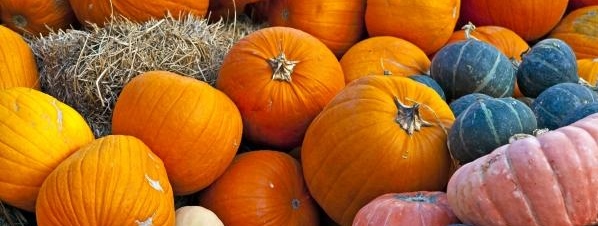
1 cup of mashed pumpkin (tinned pumpkin is suitable) or winter squash or sweet potatoes
2 eggs
2 tbsp of coconut butter at room temperature
½ cup of chopped walnut
- Preheat the oven to 350F, and line a muffin tin with paper cupcake liners or use a sillicon muffin tray
- . In a food processor (I use the blade accessory) mix the dry ingredients first (ground almond, whey, oat bran, spices, salt, baking powder
- . Add the wet ingredients (pumpkin puree, eggs, and coconut butter) and mix thoroughly
- . Fold in by hand the walnuts and date
- . . Spoon the batter into the muffin tin ¾ full to allow for them to rise
- .. Decorate with grated coconut
- .. Bake the muffins for 35 minutes, or until a toothpick inserted in the middle comes out clean.
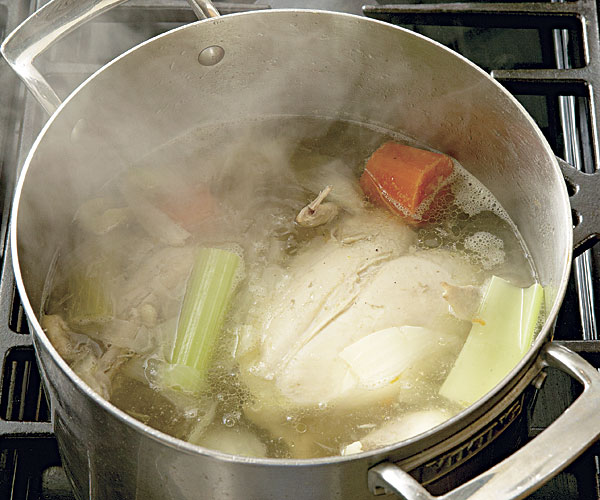 Bone broth is a cheap and effective way to extract collagen and minerals from animal bones. The quality and proportions of those precious elements makes them especially well absorbed and ensures delivery to our own connective tissues and bones. This is the recipe I recommend to anyone with joint or bone problems and to improve skin elasticity and prevent sagging. Bone broth is also a great source of the amino acids glycine, proline and glutamine and is very healing to the gut lining. This is consistent with the ancestral use of “chicken soup” as an immune system booster and (digestive) cure all.
You can make bone broth using whole organic chicken, whole fish or fish bones (including the fish head), pork or beef bones. Each will render a different flavour. I suggest starting with chicken because it has the mildest flavour.
If you are using chicken, simply place the entire raw chicken into a large pot and cover with water. Pour 60ml of apple cider vinegar to help leach the minerals from the bones. Alternatively, you can use a left over carcass from a roasted chicken. Don't be afraid to add chicken feet and the chicken's head, as they're great sources of collagen. Pig's feet are one of the richest in collagen.
Bring it all to a boil. At this stage the liquid is typically skimmed. This is, however, not necessary; the scum that rises to the top of the stock pot although off-putting is a rich source of amino acids. Once it is boiling, turn down the heat and let it simmer for 4 to 24 hours. The longer the better and an electric slow-cooker is an excellent way to safely achieve this. Ideally you want the bones to become soft.
You can also add vegetables of your choice and a small teaspoon of powdered kelp, salt pepper, spices and herbs into the pot.
Once your broth is cooked you can scoop the liquid with a ladle and serve it as it is. However, in order to keep it or freeze it you will have to strain it through a fine mesh colander and separate the liquid. Do this over a large bowl and express all the liquid by compressing the solids through the colander and leaving it to dip for 15 minutes. Once you have collected the consommé you can use it as a stock for cooking soup or consume it as a salty and tasty tea.
Potassium broth
Potassium broth is a vegetarian version of bone broth. It does not contain any of the amino acids but it is a rich source of minerals. Make it by simmering together for 4 to 5 hours vegetables with herbs, garlic and spices of your choice. Salt it with kelp powder, Atlantic or Himalayan salt and strain in the same way as the bone broth. It can be used as a drink or a soup base.
To increase potassium content you can add potato peelings or some of the vegetable mush that comes out of your juicer.
Serves 2-4
Ingredients:
• 4 eggs, room temperature
• 1 cup coconut milk
• 2 tsp vanilla extract
• 1 tbsp honey
• 1/2 cup coconut flour
• 1 tsp baking soda
• 1/2 tsp sea salt
• Coconut oil for cooking fat
Preparation:
1. Preheat a small frying pan over medium-low heat. In a bowl, mix eggs together well until frothy. Mix in coconut milk, vanilla, and honey.
2. In a second bowl combine dry ingredients by whisking together the coconut flour, baking soda, and sea salt thoroughly. Mix wet and dry ingredients together well.
3. Add coconut oil to pan and let it get hot. Pour or ladle enough batter to form a small (2-3 inch diameter) pancake. Cook until edges start to dry and firm then flip and cook through. Different pans cook differently, so your first pancake is your trial piece.
4. Eat hot or cold on its own or with a toping of your choice
Ingredients
- 2 1/2 c blanched, ground almonds (almond meal/flour) shopping list
- 1/4 c melted butter (or ghee)
- 1 c dry curd cottage cheese (press down as you measure)
- 1 t baking soda
- 1/4 t salt
- 3 eggs
How to make it
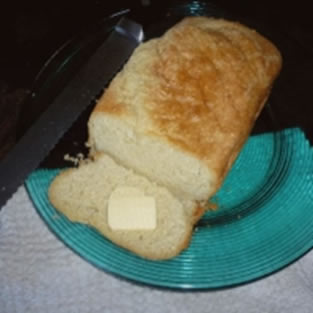
Preheat oven to 330 degrees
Place eggs, melted butter/ghee, dry curd cottage cheese, baking soda, and salt in food processor using metal blade. Process until the mixture is thick and resembles butter in texture.
Add almond flour and process until mixed thoroughly. If the dough is too stiff for the processor, wet hands and knead by hand until the flour is mixed into the other ingredients.
Grease a loaf pan (4x8) generously with butter/ghee and coat the bottom with ground almond flour.
Using wet hands, shape the dough into a loaf shape then press into the greased pan.
Bake for 45-60 minutes until lightly browned on top. There may be a crack on top of the loaf. Check if done by inserting a metal kitchen knife. If it comes out clean, it's done.
Remove from oven and run a metal spatula along the sides of the bread to loosen it at the corners and bottom of the pan.
Invert the bread onto a cake rack to cool thoroughly before cutting.
© 2026 Anne--Lise Miller